Showing posts with label reader's workshop. Show all posts

Sunday, August 10, 2014

August 10 for 10 Picture Book Event


This is only my second time participating in the August 10 for 10 Picture Book Event.  Thanks Cathy and Mandy for hosting this wonderful event! 
The 10 books that I chose represent books that have the potential to elevate the conversation.  I teach first grade and, yes, my first grade students share their thinking about the books we share.  Since these books are read aloud, my students are able to focus more deeply on characters, themes, and big ideas.  My goal is to promote deeper conversations about the texts.

Here are 10 of my favorite picture books for deepening the conversation.  These books have the potential of teaching us a lot about ourselves and others as we share our thoughts and individual perspectives.

 Wind Flyers by Angela Johnson and illustrated by Loren Long

A young boy is told the story of the Tuskegee Airmen, an all-black squadron of pilots who served during WWII, through the eyes of his uncle.  This book will help readers understand the part these brave souls played in the history of America.
Product Details
 
 Rosa by Nikki Giovanni and illustrated by Bryan Collier

I love the last line of this book, “The integrity, the dignity, the quiet strength of Rosa Parks turned her no into a YES for change.”  This is a powerful story that will undoubtedly have your students discussing the different themes that are living within its pages.
Product Details
 

Back of the Bus by Aaron Reynolds and illustrated by Floyd Cooper

A young boy sitting in the back of the bus, shares his experience of the day Rosa Parks refused to give up her seat on the same bus.
Product Details
 
 
The Story of Ruby Bridges by Robert Coles and illustrated by George Ford

This is the story of the first black child to attend an all-white elementary school.  My first graders were enraged by this story and amazed by Ruby’s courage.
Product Details


A Nation’s Hope:  The Story of Boxing Legend Joe Louis by Matt DeLaPena and illustrated by Kadir Nelson

This is the story of African American boxer Joe Louis and his bout with German boxer Max Schmeling for the world heavyweight title.  Here is my favorite line from the last page of the book, “The streets of Harlem once again dancing for their hero--But all of America dancing this time.”
 
 
Product Details
 
 
Unspoken: A Story from the Underground Railroad by Henry Cole

This wordless picture book about the Underground Railroad will certainly have students inferring, wondering, and discussing the themes and messages in this book.  This book shares the courage of everyday people.
Product Details
 
 
Henry’s Freedom Box:  A True Story from the Underground Railroad by Ellen Levine and illustrated by Kadir Nelson

Students will be fascinated by the story of Henry “Box” Brown who was one of the most famous runaway slaves on the Underground Railroad and how he mailed himself to freedom.
 
Product Details
 
 
Freedom School, Yes! by Amy Littlesugar and illustrated by Floyd Cooper

This is a story based on the 1964 Mississippi Freedom School Project.  It’s the story of a young girl and a community who bravely risk everything for a chance to learn. 
 
Product Details
 
 
Moses:  When Harriet Tubman Led Her People to Freedom by Carole Boston Weatherford and illustrated by Kadir Nelson

This is a beautifully illustrated story about Harriet Tubman, a former slave, who was a conductor on the Underground Railroad, a network of helpers and hideaways.  She escaped north into freedom and returned to the south many times to help other slaves escape.
 
Product Details


Each Kindness by Jacqueline Woodson and illustrated by E.B. Lewis

This story is about a new girl who arrives at school and is judged and constantly excluded by the other kids because of how shabbily she is dressed.  After the new girl moves, another student realizes that she has missed an opportunity to show some kindness.
 
Product Details
I'm always looking for new titles...books that will elevate the conversation.  I do have several others that I didn't include above.  Do you have any suggestions that I should add to the list?  I would love to hear from year.  Please share them in the comments below.


Wednesday, July 23, 2014

#CyberPD Part III: Reading in the Wild: The Book Whisperer's Keys to Cultivating Lifelong Reading Habits


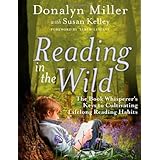
This week's reflection in on chapter 5 and the Appendices of Reading in the Wild:  The Book Whisperer's Keys to Cultivating Lifelong Reading Habits by Donalyn Miller.
Product Details
 
Wild Readers Show Preferences

Assisting my students to become independent readers is one of my responsibilities as a teacher.  I want to support them as they grow into wild readers.  Like adults, our students are readers who have different personalities and experiences.  As we find out as much as we can about our students, we become better equipped to support them as readers. 

Helping to connect students to books is one of the ways that we can offer students support.  Three areas stood out for me in Reading in the Wild as ways for readers to “connect” to books.  They connect with books by being introduced to read-alike titles, by allowing them to include light reading as an option for book selection, and by providing them opportunities to reread favorite books.

Read-Alike Titles

I love the idea of read-alike titles.  As an adult reader, I often gravitate to the kinds of books I’ve enjoyed reading in the past.  Why should that be any different for my first grade readers?  Once I identify what my first graders enjoy reading, I can use their interests to suggest similar types of books for their independent reading time.  I’m also aware of the kinds of books my students tend to enjoy as a read aloud and I’m constantly on the look-out for those kinds of books.  Books that provide weird, gross, or interesting facts, books that make you laugh, and books that teach powerful lessons.  I’ve never referred to these as read-alike books before but I think this is my new, favorite title for identifying these books.

Light Reading

When my first grade readers choose books for their reading baskets I ask them to select 6-8 good fit books, 2 informational books, and 2 free choice or look-books.  Inevitably, I have some kids who choose books that are below their reading level as their free choice option.  Donalyn shares evidence that this type of reading helps readers become more competent and it motivates them to read more.  Who doesn’t enjoy a light read from time to time?  I think most wild readers do.

Rereading Favorite Books

In primary classrooms students enjoy rereading their favorite books.  On book shopping day I usually have 2 or 3 students who ask if they can keep one or two of the books in their baskets so they can reread them.   As I was reading the story Donalyn shared about her student, Jordan, who reread the Harry Potter series and shared how he “discovers new things” when he revisits books, it reminded me of my favorite movies.  In addition to loving books, I also enjoy watching movies.  Sometimes I watch my favorite movies over again.  I often discover new things in the movie upon the second or third viewing.  I often share this analogy with my students as well.  When I’m sharing a read aloud that my students have read before I explain that it’s like the movies I’ve seen again and again.   Perhaps they’ll discover something they didn’t notice before.  I also remind them that they are not the same readers they were last year when they were introduced to the book the first time.  There are a lot of benefits to rereading books.  “In fact, rereading books increases comprehension and enjoyment.” (p. 175) I totally agree with Donalyn when she says, “f they reread books because they love them, I say let them.  We want to develop students’ ownership of reading.  When we tell students they can’t reread a book they love, we put our goals in front of theirs.” (p. 176)

Nonfiction Reading

I was shocked to read that older students avoid and dislike reading nonfiction books.  I have to agree with Donalyn when she says that it’s probably because they lack positive reading experiences.  My first grade students love reading nonfiction texts.  I’m sure it has a lot to do with their curious nature.  First graders are like sponges and they soak up tons of information while listening to and reading nonfiction texts.  Over the last few years I’ve made an effort to share more nonfiction texts when I read aloud to my students.  On page 180 Donalyn shared this list of really good activities for using nonfiction text in the classroom:

·        Add more nonfiction book talks.

·        Read-aloud nonfiction texts.

·        Use nonfiction as mentor texts.

·        Pair fiction texts with nonfiction on related topics.

·        Provide students frequent opportunities to preview, read, and show nonfiction.

Appendices
There are a ton of great forms in the Appendices for use in supporting students as they become wild readers.  My goal is to revamp some of them in order to make them more primary-friendly.  I’m hoping that other primary teachers are planning to do the same thing.  Perhaps at some point we can share the forms we create.  I love the idea of using “reader” in place of “name” on these forms.  That was a great idea and one that I plan to use in other areas.

What are your thoughts?  Thank you for taking the time to read and add your voice to the conversation. 

Tuesday, July 15, 2014

#CyperPD Part II: Reading in the Wild: The Book Whisperer's Keys to Cultivating Lifelong Reading Habits


This week's reflection is on chapters 3 and 4 of Reading in the Wild:  The Book Whisperer's Keys to Cultivating Lifelong Reading Habits by Donalyn Miller.

Product DetailsChapter 3
Wild Readers Share Books and Reading with Other Readers

Chapter 4
Wild Readers Have Reading Plans


As I wandered through these chapters, I found myself pausing, thinking, and reflecting.  Visual images of my own classroom drifted in and out of my mind.  Many of these pages resonate with me because they mirror my beliefs about teaching and supporting readers. 

'It is our charge as more experienced readers to lead children to reading, first as enjoyment and then as a place to understand themselves and the world we must live in together, and ultimately as an appreciation for the power of stories to capture what it means to be human.' (p. 160)

Here are my Super Seven Takeaways:

  1. Cultivate Successful Learning Communities.  Staring with the first days of school, I'm working to create a school family.  Students are asked to bring in beloved books to share, book baskets are filled with familiar books, and carefully selected books are shared and discussed during our read-aloud time.  We are creating an environment where everyone feels safe and respected.  "How my students and I interact creates a climate that both supports learning and provides social and emotional safety." (p. 89)
  2. Educate Parents About the Importance of Daily Reading.  Working in a Title I building, my colleagues and I spend a lot of time educating our parent community about the importance of daily reading.   We are always on the lookout for new ideas and things to try that supports this purpose.  I love Donalyn's ideas for flooding parents with pro-reading messages.  For example, adding a weekly student book recommendation to our email signatures.  What an easy way to promote reading!  Additionally, increasing children's access to books during school breaks.  I'm thinking about creating "School-Break Reading Bags" (at different reading levels) that students may check-out over the holidays.  Another great idea was teaching parents how to squeeze more reading time into boring activities.  Even if parents know theses things, it doesn't hurt to give a gentle reminder.  "Many parents lack strong, positive reading experiences in their own lives and don't see the urgency or understand how to support their children's literacy in meaningful ways.  When flooding students with pro-reading messages, we must flood their parents, too." (p. 92)
  3. Reading and Discussing Books Together Benefits Children and Builds Relationships Among Readers.  I have been thinking about this a lot lately.  Providing authentic ways for students to share and respond to what they read enhances our learning community.  In the beginning of the year, we start with post-it notes to record and capture our thoughts and we share books and ideas with reading buddies.  As the year progresses, my students can use their individual Kidblogs and our classroom Twitter account to share and discuss books with other readers in our classroom and around the world.  Even with these wonderful tools and opportunities, I try to keep the focus on the reading rather than their ability to use these amazing tools, successfully.  This can be a bit tricky with primary students.  But my first graders are amazing!  They enjoy trying new things and they're not afraid of taking risks.  I plan to give them even more opportunities to share their books and thinking with the world.   #CyperPD is a perfect example of readers sharing their thinking in authentic ways.  "When we finish a book we consider our personal reactions to it, and if we appreciate it, we share the book." (p. 100)   
  4. All Readers Deserve Opportunities to Grow.  I never really thought about expanding the influence of my epicenter readers.  Why hadn't I tapped into this valuable resource in my classroom?  Thinking about my epicenter readers from last year, these students would have been great resources for book information and modeling wild reader reading habits.  I know they were naturally doing those things, however, I plan to expand their influence from now on.  I have always wondered if I focused more on my struggling readers at the expense of my epicenter readers.  Not ignoring them, but certainly not challenging them to their fullest potential.  I plan to do better by these readers next year.  "We are tempted to focus our attention on the students who struggle with reading.  But we must remember that all readers deserve opportunities to grow." (p.121)
  5. Every Book We Read and Share Connects Us to Each Other.  I love reading and sharing books with my first graders.  Our read-aloud time is one of our favorite times of the day.  "Every book we read and share connects us to each other.  That's the best part of our story--the part that lasts long after the book ends." (p.128)
  6. Conferring Provides Opportunities for Fostering Relationships with Students.  When I pull up close to one of my kiddos, I give them my undivided attention.  I find that it's one of the best ways to learn about and support my students as readers.  "Talking one-on-one with children, guiding them as readers, and helping them move forward in their understanding seemed a lot like a conference when I stepped back and thought about it." (p.131)
  7. Series Books Provide Paths to Lifelong Independent Reading Habits.  There are so many great reasons for introducing students to books in a series.  "Reading series books provides students with both commitment and challenge plans, depending on readers' needs and interests.  It provides a scaffold for students who lack confidence or cannot follow through on their own reading plans.  And it provides readers familiarity so students are much less likely to end up floundering with unsuccessful book choices or abandoning book that didn't work." (p.152)  Below are a few series books that I plan to share with my first graders this year:
Marty McGuire Series by Kate Messner
*Heidi Heckelbeck by Wanda Coven
Andy Shame by Jennifer Jacobson
*Ivy and Bean by Annie Barrows
*Bink & Gollie by Kate DiCamillo
*Mercy Watson by Kate DiCamillo
*Fly Guy by Tedd Arnold
Frankie Pickle by Eric Wight
*Katie Kazoo, Switcheroo by Nancy Krulik
Freddie Fernortner Fearless First Grader by Johnathan Rand
 
*I've shared most of these books with former first graders and they have loved them.  I'll be reading a couple of the titles on the list for the first time this school year.
 
Are there any titles that you would add to this list for primary students?  Please share...I would love to hear from you.
 

Wednesday, July 9, 2014

#CyberPD Part I: Reading in the Wild: The Book Whisperer's Keys to Cultivating Lifelong Reading Habits

Product Details

                      
Beginning this week and for the month of July, I'm participating in #CyberPD (online professional development).  A group of educators, like me, will be reading the book, Reading in the Wild:  The Book Whisperer's Keys to Cultivating Lifelong Reading Habits by Donalyn Miller.  We'll be writing reflections about the book on our blogs, commenting on the blogs of others who are participating, and using Twitter to continue the conversations.  In this first session, I'll be reflecting on Chapters 1 and 2.  This event is hosted by Cathy Mere, Laura Komos, and Michelle Nero.  Thank you, ladies, for hosting this wonderful event.

I've been thinking about what it means to be a "wild" reader a lot lately. As a first grade teacher, I'm working with students who are at the beginning of their reading journeys. I want them to see themselves as readers.  While reading this book, I was looking through the lens of a first grade teacher and asking myself how these ideas might impact my own teaching.


Chapter 1
Wild Readers Dedicate Time to Read

Some Important Considerations:
  • "Students need to connect with other readers and participate in a reading culture that values them. Our students must see themselves as readers, or they will never embrace reading beyond school." (p.  9)
  • "It is difficult for many children to become wild readers if they don't read during the edge times." (wasted moments in between our daily commitments) (p. 13)
  • "Reading a book in one sitting (binge reading) is a rare indulgence, but most wild readers take advantage of the random Saturday or vacation and read books cover to cover." (p. 16)
  • "Most wild readers prefer a relaxing, quiet environment." (p. 23)
  • "Fake reading and reading avoidance commonly occur when students lack independent reading habits, confidence, or adequate reading skills." (p.25)
  • "As teachers, we need to reclaim reflective practices for ourselves and use it as a tool to continually recalibrate our teaching to our core beliefs, determine what is and isn't working, and focus our teaching so we can continue to offer quality instruction that we can reasonably manage and maintain throughout the school year." (p.41)
The impact these ideas have on my teaching:
  • My first graders participate in partner reading time, daily.  They enjoy sharing and discussing books with peers and value this opportunity.
  • I'm always looking for creative ways to encourage my first graders to read outside of the classroom.  Last year, we carried books to read in between our gym and music specials.  We used this "edge time" to read more books.
  • As an adult reader, I enjoy binge reading.  I know that I'm hooked when I continue to think about the characters long after I have finished reading the book.  As a first grader teacher, I might have 1 or 2 binge readers in my classroom each year.  These students tend to read above grade level and have positive reading experiences outside of school.  I can model this behavior for all of my first graders by discussing and reminding them of the characters we know and love from books we've shared as class.
  • All students appreciate a quiet classroom during reading time.  Reading is thinking.  Our reading environment must support the reading and thinking we do all year.
  • I refer to fake-reading as "pretend reading" in my classroom.  I had a student who struggled in this area for most of the school year.  His reading was above grade level.  However, he did not value our reading time and complained of being bored.  It took me months to discover that he was not selecting books he was interested in reading.  Donalyn's warning signs (p. 27) are a helpful reminder of what students do when they are not really reading.  She also shares how to address these behaviors in chapter 1.
  • Reflection is the key to almost everything we do as teachers.  Like many educators, I'm constantly reflecting on my teaching.  Each year I find myself tweaking my teaching practices and classroom routines in an effort to support learners and provide a positive classroom experience for my students.
Chapter 2
Wild Readers Self-Select Reading Material

Some Important Considerations:
  • "When students select their own books to read and enjoy, they develop confidence in their abilities to make reading choices and build their capacity for choosing books in the future." (p. 46)
  • "Read-alouds provide students with support in choosing their own books by increasing their title and author awareness, improving their background knowledge and experience, and fostering increased motivation and engagement with reading through positive reading experiences." (p. 56)
  • "Book drawings are an engaging and fun way to introduce new books to students and encourage risk taking.  Students are more willing to try unfamiliar books when I endorse them and classmates express enthusiasm for reading them.  Even students who don't enter drawings build title and author awareness." (p.58)
  • "The more we know about books and our individual students, the better support we can provide." (p. 64)
  • "Students who regularly choose books that they can't read or don't enjoy are unlikely to read much or find reading personally gratifying.  Exposing students to lots of books and positive reading experiences while building a network of other readers who support each other provides student with tools that last beyond the classroom setting." (p. 70)
  • "Providing students with scaffolded opportunities to preview, evaluate, and choose texts gives them the practice they need in self-selecting books." (p.71)
  • Managing a classroom library requires curation--selecting the best, most current materials for curriculum needs and students' interests." (p. 80)
The impact these ideas have on my teaching:
  • My first graders enjoy choosing their own books to read.  Allowing them to fill their baskets with books of their choice is a huge motivator for reading.
  • Our Read-Aloud time is one of our favorites parts of the school day.  I love the idea of allowing students to select the next read-aloud using book commercials. (p. 54) 
  • We use the "Random Name Generator" on our Interactive White Board to randomly select students who want dibs our the newest additions to our classroom library or the next book in a series that was recently introduced.  It's is fast and effective with my first graders because they know the computer is doing the choosing rather than the teacher. 
  • Getting to know our readers is vital.  I've tried a number of different ways over the years, such as reading surveys and the like.  Last year, when I had a student teacher, I was able to conduct reading interviews with my first graders which provided some helpful information.  It's amazing how well you get to know the readers in your classroom when you talk to students even during informal gatherings like "lunch bunch" celebrations.  It's a matter of noticing, listening, and noting.
  • Making sure that my first graders have books they can read and enjoy is always a challenge.  On any given day I encounter children who are sitting with baskets of books that are too challenging for them to read.  This tends to be especially true of my struggling readers who desire to have a successful reading experience as they build stamina and encounter books they enjoy and connect with.  I'm wondering what would be the best way to approach a first grade friendly "Reading Selection Reflection".  Perhaps this could be accomplished in small groups by creating an anchor chart based on their input.  I'll have to consider this idea further.
  • Occasionally, I create tubs of books for students who need this extra support.  The books are at their reading levels and they do their book shopping out of these prearranged tubs.  They still have choice, however, they are not yet ready to choose books from our entire classroom library.  I have found this support to be quite successful.  Also, I love Donalyn's suggestion to "Unpack your thinking when evaluating a book and share it with students." (p. 71)  This would make a great mini-lesson and one that I need to share with my first graders periodically throughout the school year.
  • Our classroom library is one of those areas that is a work in progress.  I'm constantly working on the best way to arrange books and make them accessible to my first graders.  I also have a bit of a book addiction and I'm always buying new titles to add to our collection.  I love the idea of allowing students to carefully rummage through the books even before you introduce them to how to use the library.  One of my favorite first grade moments was the day I opened two boxes of donated books in front of my first graders and shared the books inside.  It was like Christmas in September.  That was a blast!
As I continue to dig into Reading in the Wild, I have lots to consider as I prepare for a new school year.  There are things that I can identify with because they validate what I'm already doing in my classroom.  There are a few areas that I have moved away from but I may need to "recalibrate" my teaching as it relates to these ideas.  And...some surprises that make me smile as I'm already starting to think about how I might tweak these ideas to engage and support first grade learners.  I can't wait to dig into chapters 3 and 4. 

Monday, December 26, 2011

Digging In with Word Work

WORD WORK
Word Work is one of my students' favorite components of the Daily 5.  Word Work allows students the opportunity to practice their wall words and/or spelling words.  Word Work is a very important literacy component, and your students will take it seriously if you provide clear expectations.  When launching Word Work, it's important to create an anchor chart with your students.  The anchor chart details the expectations for demonstrating independence during Word Work.  There are several different choices that students can select from during Word Work.  The options that my students choose from are as follows:
Visit my classroom blog for a list of the websites my students frequently use for Word Work. http://vruckes.edublogs.org/

MODELING
Modeling is another key factor for a successful launch of Word Work.  It's important for students to see the correct way and the incorrect way to participate in Word Work.  It's also important to model how to put away materials at the end of the Daily 5 round.  In The Daily 5, the authors stress that the incorrect model is shown first, and it's followed by the correct model.  I think it's crucial to leave students with the correct model in their minds.

TOOLS
It's important to reinforce that the materials used for Word Work are tools and not toys.  I can't begin to tell you how many times I've repeated the refrain, "Markers are tools and not toys."  However, it sticks with them, and they really learn to use the materials correctly.  My students use individual white boards for Word Work probably more that any of the other materials.  Some teachers use old sock as erasers.  I buy felt squares which I cut in half.  They make perfect erasers.  Besides, I can't stand the thought of having old socks lying around my classroom.  I'm just a bit picky that way.  The felt squares are durable and washable, and best of all, cheap.  I haven't had to replace these for several years now.  They can be purchased at most craft and fabric stores, and they come in many different colors.

Rainbow Paper is another engaging alternative.  My students rewrite their Wall Words in rainbow colors.  Each letter of the word is a different color.  When students are using the rainbow paper for Word Work, they are not only working with words, they are also practicing their handwriting.

Once Word Work has been introduced, it's important to maintain consistency.  Keep the materials the same and don't worry that your students are getting board with them.  You want to keep them  focused on their word work and not on new items which may become distracting.

What are the go-to tools and websites used for Word Work in your classroom? 

Wednesday, November 30, 2011

Digging in with Read To Someone in the Daily 5

Reading to a buddy is a favorite among readers.  Every year my students enjoy the Read to Someone component of the Daily 5 probably more than any of the other components.  I introduce Read to Someone by creating an anchor chart  with my students.  Across the top of the Chart we list the reasons why we do Read to Someone; To become better readers, because it's fun, etc.  Next, we record what the students will be doing.  Finally, we record what the teacher is doing.  I don't know about you, but when I create these anchor charts with my students, my handwriting is not as neat and polished as I would like it to be.  I tell my students that I will be rewriting the chart in order to make it presentable for hanging.  Once the anchor chart is rewritten, I laminate it.  This ensures that I can reuses it year after year.  Next year, after I've created another anchor chart with a different group of students, I won't need to rewrite it, I simply pull out the copy that I originally laminated.  The information is basically the same, and my students have no Idea that I use the same anchor chart every year.  It's our little secret.


There are two ways to Read to Someone.  The first way is having partners reading the same book and the same page.  This is called, I read, you read.  During I read, you read, the higher reader should read first. This helps lower readers with word recognition.  The second way to do Read to Someone, is allowing partners to take turns reading their own books, a page at a time and applying the "Check for Understanding" strategy.  Partner one reads the first page of his or her book, and partner two does the check for understanding".  Next, partner two reads the first page of their book, and partner one does the "Check for Understanding.  Using the "Check for Understanding" strategy, the student listening to the reading will answer two questions, who? (Who is this page/part about?) and what? (What just happened?).  In the book, The Literacy Cafe, the authors suggests making check marks out of wood or some other material for students to use.  The whole thought of that was way too overwhelming for me.  Instead, I made bookmarks out of precut, rectangular shaped foam.  On one side of the foam shapes I drew a check with the words "Check for Understanding" written on the check mark.  On the other side of the foam I wrote the letters EEKK (Elbow to Elbow, Knee to Knee).  Next to the EEKK I also wrote, Who? and What?  The purpose of doing the "Check for Understanding" is to ensure that each person is listening while the other is reading.


Having kids model the right and wrong ways to do Read to Someone is very critical for a successful launch.  They should model sitting elbow to elbow and knee to knee, and holding the book in the center between them.  Additionally, I like to select one of my good readers to help me model how to do the "Check for Understanding". 

When I introduce Read to Someone, I have my students choose from a sets of multiple copies of books that I have at different levels.  Once Read to Someone is up and running, I allow my students to choose books from their book baskets.  In my opinion, Read to Someone is one of the most challenging Daily 5 components to get up and running smoothly.  With my first graders, I tend to launch Read to Someone slowly.  I usually start with, I read, you read, only.  I want to make sure students are successful with this part first.  Within the next month or two, I introduce Read to Someone again with each reader reading from their own books and doing the "Check for Understanding" strategy.  I probably could start this sooner, however, I believe it's best to go slow, in order to go fast later.  The best advice I can give to someone just beginning the Daily 5, is to dig in and make it your own!

Friday, November 25, 2011

Digging In With Read To Self

Of the five components of the Daily 5, I would have to say that Read to Self is my favorite.  Why?  I'm glad you asked.  It's because my students are more focused and productive during Read to Self, than any other time in my classroom and during any other component of Daily 5.

When I launch the Daily 5, I always start with Read to Self.  Reading to self is also known as independent reading.  It's important that my students are building stamina, and able to read independently for at least 20 minutes before I introduce the other "Daily's" (the other parts of the Daily 5).  In my first few mini lessons for Read to Self, we address the importance of selecting good fit books, choosing a good reading spot, and building stamina. We also create the Read to Self anchor chart which is covered in the book.  First, we discuss why reading to self is important, and that information is written on the top of the anchor chart.  Next, we discuss what the students will do, and I record their responses on the chart.  Finally, we discuss what the teacher will be doing, and I record those responses too.  Modeling appropriate reading behavior is also very important, and it's my students' favorite thing to do.  Two or three students are selected to model the incorrect way to read during Read to Self, followed by the correct way to read during Read to Self time.  The book suggests selecting a student who would typically have trouble staying focused or engaged.  The modeling gives them the opportunity to get silly and play around in front of an audience.  However, they are also required to model the correct way for the class.

During Read to Self I gather my students on the rug in the meeting area.  I start with a short focus lesson which lasts about 6-10 minutes.  Your focus lesson should be about 1 minute per the age of your students. Since I teach first grade, my focus lesson should generally be about 6 minutes long.  When I'm looking for a text, I always look for quick reads so that my focus lesson stays within the 6-10 minute time frame.  After the focus lesson I send row one off to find a reading spot quickly and quietly (Q and Q).  Then rows two through four are sent off in the same manner.  Since we are gradually building stamina, we start with reading independently for 3 minutes, and increase the time by one minute each day.  The most important aspect of the stamina building, is to stop Read to Self when things begin to fall apart.  Even if only one student is not reading or is off track in some way, the entire class is signaled over to the meeting area, and the reading is stopped.  This prevents the reinforcement of negative reading behaviors.  I ring chimes to signal my students over to the meeting area.  Some teachers signal with bells, music, drums, or simply call them over with a verbal signal or chant. 

Having students self-evaluate and reflect is very important during the share time.  We share and reflect on what went well and what we can improve on next time.  This year my students and I graphed our reading stamina each day.  After each 10 minute increment was reached we had a classroom reading celebration.  From time to time you may find that you have to refer to the anchor charts when things are not running smoothly.  I have found that it is helpful to share the anchor charts after holidays or other extended breaks as a reminder of what the expectations are in our classroom.  In this way the anchor charts seves as a community building piece as well.


During our Read to Self time my goal is to conference with 2-3 students, and meet with 1 or 2 strategy groups each day.  Once I have my entire Daily 5 up and running, I continue to keep my first round a whole class Read to Self round.  This is a little different from what most teachers do but it works for my students and my classroom.  When all of the Daily 5 is up and running, the rounds tend to get a bit noisy.  Having one round of Read to Self ensures that I have at least that round each day, when things are a little quieter and much more manageable.

This year I incorporated Flashlight Friday (see my parent letter below) to my Read to Self time.  I asked my parents to send in a small flashlight with their child, and I informed them that flashlights could be purchased at the Dollar Store.  Of course flashlights of all sizes were sent in.  I also purchased extra flashlights and batteries to keep on hand as needed.  Currently, we do Flashlight Friday during the last 10 minutes of the day on Fridays.  My Daily 5 rounds remain the same, but the students are getting a little extra reading time, and they love it.  During Flashlight Friday, we turn off the lights and the students read by flashlight.  It's another way to encourage reading.  I love when I say, "It's time for Flashlight Friday" and my students respond with, "Yes!"  
Flashlight Friday Letter


Read to Self looks a little different in my classroom.  However, the most important thing about digging in with the Daily 5 is to "Make It Your Own".

Monday, August 22, 2011

DIGGING IN WITH THE DAILY 5

The Daily 5 is a book (resource) written by Gail Boushey and Joan Moser, also know as "the sisters", which focuses on literacy instruction and independence.   It is currently being used in many classrooms across the country.
There are 5 literacy components:  Read to Self, Read to Someone, Listen to Reading, Word Work, and Work on Writing.

GETTING STARTED
The most important discovery that I've made after getting started with the Daily 5 was this: Make It Your Own. The Daily 5 is a structure and management piece for a lot of the things you are already doing in your classroom.  As with most things, there is more than one way to do the Daily 5. You have to make it work for You and Your classroom. 

Digging In
When digging in with the Daily 5, you'll want to focus on your classroom library.  My books are arranged in baskets, which I keep on top of counters, and others are displayed on shelves.  My classroom library is a combination of books organized by reading level (GRL), genre, theme, topics, and units of study.  In fact, how books are arranged is not that important.  What's more important is that your students know how to pick "Good Fit Books".  One of the first focus lessons that you will teach is the "I Pick" lesson, where you teach students how to pick books that are a good fit for them.

Meeting Area
Another important component of the Daily 5 is creating a meeting area within the classroom.  The meeting area is a place where students come together as a group for mini-lessons or focus lessons, book discussions, checking in, and sharing/reflecting on learning.  Many teachers anchor the meeting area with a large rug.  The rug helps to identify the meeting area for your students.

Signal
Finding a way to get the attention of your students and bringing them back to the meeting area, is the purpose of the signal.  There are many creative signals that you can use.  I use chimes in my classroom.  I love the calm sound of the chimes.  For me, it's a calm and quite way to signal my students that we need to stop what we were doing, and go to the meeting area.  Music, drums, spoken signals, etc. are other great ways to reconvene your students.

Conferring
One of the best aspects of the Daily 5 is that it builds independence.  As the students are working independently on their daily 5 choice, the teacher is able to work with students.  This structure allows the teacher time for conferring one-on-one with students, while the rest of the class is busy working on their Daily 5 choice.  Choice is key.  Having the ability to choose what to work on, engages students and promotes the independent work habits that are so important to a successful Daily 5 round. Take a look at my conferring bag below.


If you would like additional information on the Daily 5, like my conferring bag, refer to my post on Ten Tried and True Tips For Using the Daily 5.

In my next few posts I'll focus on the 5 different components of the Daily 5, so stay tuned and Dig In.  You'll be glad you did. 

Monday, July 25, 2011

THE INTERACTIVE READ-ALOUD

Reading aloud to students is one of the most important aspects of literacy in the classroom.  For teachers like myself, it's also one of the most enjoyable moments.  Even older children enjoy the stories that are read to them by their teachers.  What this usually looks like in the lower elementary classrooms is, a classroom of students, sitting on the carpet, gazing up at the teacher who is reading from a rocking chair, and hanging on to her every word.  (Let's be honest, others are playing around and distracted.)  In upper elementary classrooms the students may be sitting at desks, doodling on a pieces of paper, and attentively listening, as the teacher reads from a special place in the classroom.  What about those kids who are not tuned into the story....or distracted and daydreaming?  I'm so glad you asked.  The Interactive Read-Aloud invigorates the traditional read-alouds taking place in many classrooms.  Additionally, it stimulates the learning environment by engaging students in the read-aloud activity.

What makes the reading interactive?  Instead of being passive listeners during the Read-Aloud, the students are active participants in the learning and discovery.  In addition to listening to the story, the students are discussing elements, recording their thoughts in a Read-Aloud Notebook, and sharing their ideas with classmates.  Here's how to get started.  All you need is the Read-Aloud book, spiral notebooks for each student, composition books work well too, and a the Ways to Respond In Your Notebook chart, which is described below. Next, make a Book Preview packet.  Copy of the book jacket, including the summary/gist of the story, copy the first page of the story, and the author's biography.  If the book has a chapter page, copy that as well, or create a document listing the chapters from the book.  This is especially important if the chapter titles have names, rather than just numbers.  Make a preview packet for each student which includes the previous pages mentioned, and you're ready to get started.

Begin by introducing the Read-Aloud book to your students.  Issue each student a book preview packet, and a notebook.  Preview the book with the sudents using the preview packet.  Next, create a list of questions, about the book, suggested by the students.  Record each question on your interactive whiteboard, or on chart paper and save the chart or document.  Every day before beginning the reading, review the questions to see if any have been answered.  Additionally, record new questions that students have.  You can decide how often to add more questions based on your students' input.  Some days they may have lots of questions to add, and other days only a few.

READ-ALOUD
Next, start reading the book.  I like to read one or two chapters a day, depending on our schedule and the length of the chapters.  Allow more time on the day the book is introduced, since the preview and questions will take up a big chunk of your time.  You can also preview the book the day before strating the first chapter.  As you are reading aloud the book to your students, they are recording their thinking in their notebooks.  To support them with this, your students can refer to the Ways To Respond in Your Notebook chart.  The chart will give them ideas for how to respond in their notebooks.  I created a chart on poster board and hung it in my classroom as an anchor chart.  You could also create a chart on you interactive whiteboard and save it for use during each read-aloud session.  Here is a list of some of the items I included on my chart:

Ways To Respond In Your Notebook
  • Make a prediction
  • Ask a question
  • Draw a picture of your favorite part-include a caption or summary
  • Summarize the chapter(s)
  • Describe a character
  • Record a quote from the story and explain what you think it means
  • Describe a part you liked/ tell why
  • Describe a part you didn't like/tell why
  • Describe something you didn't understand
  • Make a list of interesting words
  • Explore the title-explain why you think the writer chose this title
The great thing about the Interactive Read-Aloud is the students are active participants in the task.  After the Read-Aloud, students use their notebook pieces to engage in discussions about the book.  These discussions can also occur periodically during the reading. 

ASSESSMENTS
What about assessments?  The assements are built into the learning activities during the Interactive Read-Aloud.  The students' Read-Aloud Notebooks and participation in the discussions, can both be used to assess students' understanding of the story.  I like to collect notebooks once a week for this purpose.  Additionally, when the story is finished, I have my students construct a written reflection as an additional assessment.  Students select one of their best notebook entries to compelete a written reflection of their understanding of the story.  I copy the notebook page and staple it to their reflection.  Later, when I'm reading their reflections, I can compare them to the entry in their notebook.  I also remind students, throughout the book reading, to write good notebook entries.  They will be referring to their notebook entries, when writing their reflection piece, once the Read-aloud book is finished. 

Below is a list of some of the titles I've used for my Interactive Read-Alouds.  As you revive your Read-Aloud time, you will be amazed at how much more your students learn and discover about the stories, as they become active participants in this interactive process. 

SUGGESTED BOOKS:
  • The Tale of Despereaux by Kate Dicamillo
  • The Miraculous Journey of Edward Tulane by Kate Dicamillo
  • The Beloved Dearly by Doug Cooney
  • Journey by Patricia Maclachlan
  • Shredderman by Wendelin VanDraanen
  • The Toothpaste Millionaire by Jean Merrill
  • Fourth Grade Rats by Jerry Spinelli
  • Maniac Magee by Jerry Spinelli
  • Lawn Boy by Gary Paulsen

Thursday, July 21, 2011

TEN TRIED AND TRUE TIPS FOR THE DAILY 5

1.  Laminate Anchor Charts~Create anchor charts with the students.  Record their ideas.  Afterwards, neatly rewrite charts and fancy them up as desired.  Laminate the final chart and hang in the classroom.  Next year, create anchor charts with your new students, but instead of rewriting the chart for display puposes, pull out the laminated chart from the previous year (it will have similar information) and hang it.


2.  Check for Understanding Strategy~The Sisters suggest using checkmarks cut from wood, with the strategy written on them.  Instead, use precut rectangular pieces of foam.  Use a permanent marker to record "Check for Understanding" on one side and "Who?" and "What?" on the reverse side.  These foam pieces can be purchased from craft stores.  They are extremely durable and inexpensive.


3.  Listen to Reading~Use classroom computers as a Listen to Reading station.  There are many great websites where students can listen to stories on-line.  Some of my favorites are http://www.starfall.com/ and http://www.storylineonline.net/.

4.  Creat a Reading Bag~A bag or tote with pockets works best.  The tote would include the following items: 
  • Dry Erase Board
  • Dry Erase Markers
  • Pensieve
  • Leveled Books
  • Sticky Notes
  • Pencils
  • Word Cards/Letter Cards


5.  Repertoire of Mentor Texts~Locate a number of menor texts in advance.  Use these during your minilessons or focus lessons.  Short texts are best because you can finsih the entire text within the time frame of your focus lesson and the students are able to focus on the strategy being taught.

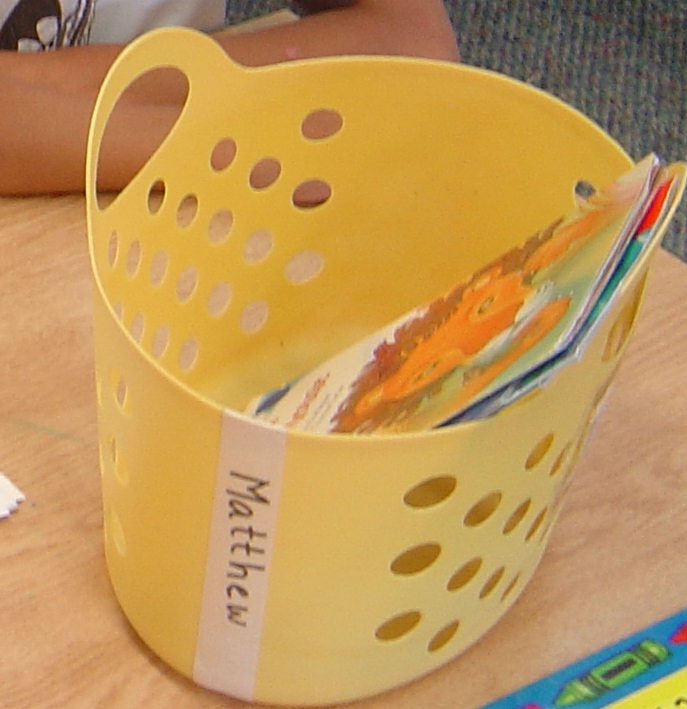
6.  Book Baskets~Be creative when looking for appropriate book boxes or book baskets.  Many teachers use book boxes which can be a little costly.  A good substitue is a book basket.  Baskets can be purchased at the Dollar Store and they come in a variety of colors.


7.  Strategy Board~Instead of writing the student's name on a sticky note and placing the note next to the strategy the student is working on, use a photo of the student instead.  At the beginning of the school year take head shots of each child.  Place the child's picture on the strategy board next to the strategy he/she is working on.


8.  Keep Track of Read-Alouds~Keep a record of all books that are read aloud to your students.  Keep this list posted somewhere in the classroom.  Update the list daily/weekly (this could be a classroom job.)  Record the book title, author, and genre.  Poster board works well, but I prefer a scroll.  Make one by stapling papers together and rolling up and unrolling as you add books to your list.  At the end of the school year you can revisit some of the favorites from the list.

9.  Utilize Technology~If you have a Smart Board, you can use some of the smart tools to create an electronic version of the Daily 5 check-in.  Students move their icons/pictures/symbols to indicate their Daily 5 choice.

10.  Be Resourceful~There are a lot of great resources available that will complement what you're doing with the Daily 5.  Two of my favorite teacher resources are Growing Readers-Units of Study in the Primary Classroom by Kathy Collins, and Words Their Way-Word Study for Phonics, Vocabulary, and Spelling Instruction (Pearson-Merrrill/Prentice Hall).  Read what others have to say on the subject and make it your own.