Showing posts with label interactive read-alouds. Show all posts

Sunday, August 10, 2014

August 10 for 10 Picture Book Event


This is only my second time participating in the August 10 for 10 Picture Book Event.  Thanks Cathy and Mandy for hosting this wonderful event! 
The 10 books that I chose represent books that have the potential to elevate the conversation.  I teach first grade and, yes, my first grade students share their thinking about the books we share.  Since these books are read aloud, my students are able to focus more deeply on characters, themes, and big ideas.  My goal is to promote deeper conversations about the texts.

Here are 10 of my favorite picture books for deepening the conversation.  These books have the potential of teaching us a lot about ourselves and others as we share our thoughts and individual perspectives.

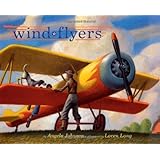
 Wind Flyers by Angela Johnson and illustrated by Loren Long

A young boy is told the story of the Tuskegee Airmen, an all-black squadron of pilots who served during WWII, through the eyes of his uncle.  This book will help readers understand the part these brave souls played in the history of America.
Product Details
 
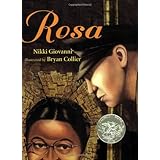
 Rosa by Nikki Giovanni and illustrated by Bryan Collier

I love the last line of this book, “The integrity, the dignity, the quiet strength of Rosa Parks turned her no into a YES for change.”  This is a powerful story that will undoubtedly have your students discussing the different themes that are living within its pages.
Product Details
 

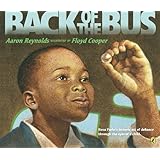
Back of the Bus by Aaron Reynolds and illustrated by Floyd Cooper

A young boy sitting in the back of the bus, shares his experience of the day Rosa Parks refused to give up her seat on the same bus.
Product Details
 
 
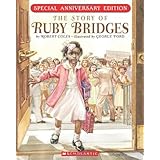
The Story of Ruby Bridges by Robert Coles and illustrated by George Ford

This is the story of the first black child to attend an all-white elementary school.  My first graders were enraged by this story and amazed by Ruby’s courage.
Product Details


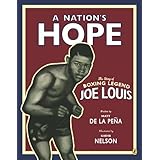
A Nation’s Hope:  The Story of Boxing Legend Joe Louis by Matt DeLaPena and illustrated by Kadir Nelson

This is the story of African American boxer Joe Louis and his bout with German boxer Max Schmeling for the world heavyweight title.  Here is my favorite line from the last page of the book, “The streets of Harlem once again dancing for their hero--But all of America dancing this time.”
 
 
Product Details
 
 
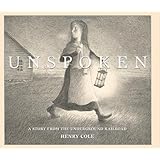
Unspoken: A Story from the Underground Railroad by Henry Cole

This wordless picture book about the Underground Railroad will certainly have students inferring, wondering, and discussing the themes and messages in this book.  This book shares the courage of everyday people.
Product Details
 
 
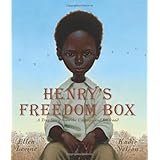
Henry’s Freedom Box:  A True Story from the Underground Railroad by Ellen Levine and illustrated by Kadir Nelson

Students will be fascinated by the story of Henry “Box” Brown who was one of the most famous runaway slaves on the Underground Railroad and how he mailed himself to freedom.
 
Product Details
 
 
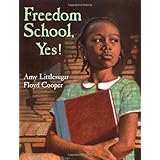
Freedom School, Yes! by Amy Littlesugar and illustrated by Floyd Cooper

This is a story based on the 1964 Mississippi Freedom School Project.  It’s the story of a young girl and a community who bravely risk everything for a chance to learn. 
 
Product Details
 
 
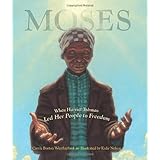
Moses:  When Harriet Tubman Led Her People to Freedom by Carole Boston Weatherford and illustrated by Kadir Nelson

This is a beautifully illustrated story about Harriet Tubman, a former slave, who was a conductor on the Underground Railroad, a network of helpers and hideaways.  She escaped north into freedom and returned to the south many times to help other slaves escape.
 
Product Details


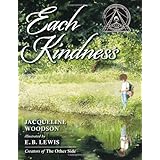
Each Kindness by Jacqueline Woodson and illustrated by E.B. Lewis

This story is about a new girl who arrives at school and is judged and constantly excluded by the other kids because of how shabbily she is dressed.  After the new girl moves, another student realizes that she has missed an opportunity to show some kindness.
 
Product Details
I'm always looking for new titles...books that will elevate the conversation.  I do have several others that I didn't include above.  Do you have any suggestions that I should add to the list?  I would love to hear from year.  Please share them in the comments below.


Monday, July 25, 2011

THE INTERACTIVE READ-ALOUD

Reading aloud to students is one of the most important aspects of literacy in the classroom.  For teachers like myself, it's also one of the most enjoyable moments.  Even older children enjoy the stories that are read to them by their teachers.  What this usually looks like in the lower elementary classrooms is, a classroom of students, sitting on the carpet, gazing up at the teacher who is reading from a rocking chair, and hanging on to her every word.  (Let's be honest, others are playing around and distracted.)  In upper elementary classrooms the students may be sitting at desks, doodling on a pieces of paper, and attentively listening, as the teacher reads from a special place in the classroom.  What about those kids who are not tuned into the story....or distracted and daydreaming?  I'm so glad you asked.  The Interactive Read-Aloud invigorates the traditional read-alouds taking place in many classrooms.  Additionally, it stimulates the learning environment by engaging students in the read-aloud activity.

What makes the reading interactive?  Instead of being passive listeners during the Read-Aloud, the students are active participants in the learning and discovery.  In addition to listening to the story, the students are discussing elements, recording their thoughts in a Read-Aloud Notebook, and sharing their ideas with classmates.  Here's how to get started.  All you need is the Read-Aloud book, spiral notebooks for each student, composition books work well too, and a the Ways to Respond In Your Notebook chart, which is described below. Next, make a Book Preview packet.  Copy of the book jacket, including the summary/gist of the story, copy the first page of the story, and the author's biography.  If the book has a chapter page, copy that as well, or create a document listing the chapters from the book.  This is especially important if the chapter titles have names, rather than just numbers.  Make a preview packet for each student which includes the previous pages mentioned, and you're ready to get started.

Begin by introducing the Read-Aloud book to your students.  Issue each student a book preview packet, and a notebook.  Preview the book with the sudents using the preview packet.  Next, create a list of questions, about the book, suggested by the students.  Record each question on your interactive whiteboard, or on chart paper and save the chart or document.  Every day before beginning the reading, review the questions to see if any have been answered.  Additionally, record new questions that students have.  You can decide how often to add more questions based on your students' input.  Some days they may have lots of questions to add, and other days only a few.

READ-ALOUD
Next, start reading the book.  I like to read one or two chapters a day, depending on our schedule and the length of the chapters.  Allow more time on the day the book is introduced, since the preview and questions will take up a big chunk of your time.  You can also preview the book the day before strating the first chapter.  As you are reading aloud the book to your students, they are recording their thinking in their notebooks.  To support them with this, your students can refer to the Ways To Respond in Your Notebook chart.  The chart will give them ideas for how to respond in their notebooks.  I created a chart on poster board and hung it in my classroom as an anchor chart.  You could also create a chart on you interactive whiteboard and save it for use during each read-aloud session.  Here is a list of some of the items I included on my chart:

Ways To Respond In Your Notebook
  • Make a prediction
  • Ask a question
  • Draw a picture of your favorite part-include a caption or summary
  • Summarize the chapter(s)
  • Describe a character
  • Record a quote from the story and explain what you think it means
  • Describe a part you liked/ tell why
  • Describe a part you didn't like/tell why
  • Describe something you didn't understand
  • Make a list of interesting words
  • Explore the title-explain why you think the writer chose this title
The great thing about the Interactive Read-Aloud is the students are active participants in the task.  After the Read-Aloud, students use their notebook pieces to engage in discussions about the book.  These discussions can also occur periodically during the reading. 

ASSESSMENTS
What about assessments?  The assements are built into the learning activities during the Interactive Read-Aloud.  The students' Read-Aloud Notebooks and participation in the discussions, can both be used to assess students' understanding of the story.  I like to collect notebooks once a week for this purpose.  Additionally, when the story is finished, I have my students construct a written reflection as an additional assessment.  Students select one of their best notebook entries to compelete a written reflection of their understanding of the story.  I copy the notebook page and staple it to their reflection.  Later, when I'm reading their reflections, I can compare them to the entry in their notebook.  I also remind students, throughout the book reading, to write good notebook entries.  They will be referring to their notebook entries, when writing their reflection piece, once the Read-aloud book is finished. 

Below is a list of some of the titles I've used for my Interactive Read-Alouds.  As you revive your Read-Aloud time, you will be amazed at how much more your students learn and discover about the stories, as they become active participants in this interactive process. 

SUGGESTED BOOKS:
  • The Tale of Despereaux by Kate Dicamillo
  • The Miraculous Journey of Edward Tulane by Kate Dicamillo
  • The Beloved Dearly by Doug Cooney
  • Journey by Patricia Maclachlan
  • Shredderman by Wendelin VanDraanen
  • The Toothpaste Millionaire by Jean Merrill
  • Fourth Grade Rats by Jerry Spinelli
  • Maniac Magee by Jerry Spinelli
  • Lawn Boy by Gary Paulsen