Showing posts with label writing. Show all posts

Saturday, March 14, 2015

Saturdays, Sushi and Writing (SOL Day 14)

On Saturdays I love spending time with my daughter, Rachel.  Today we went to one of or favorite spots for lunch to enjoy a little sushi.  After we settled in at one of the tables, Rachel looks and me and asks, "So what's happening in Valerie's world?"  I love how considerate Rachel is.  She didn't start the conversation by telling me what was on her mind or asking me for a bit of advice.  She wanted to hear about what her mom had been up to this week.

Life gets super busy.  Even though Rachel is in college, she still lives at home and commutes to a local University.  Our paths cross briefly during the week.  She spends a lot of time on campus and when she's home she's usually studying.  I'm equally busy, spending a lot of time at school either doing things in my classroom or attending various after school meetings.

In response to Rachel's question, I immediately told her about the writing samples that I had looked over this morning and how I'm a much better writing teacher than I was earlier in my teaching career.  It's the subject that I consider to be the most difficult and time consuming to teach.  I always feel like I wish I were two people during writing time in my classroom.  However, I've worked hard to improve my teaching practices around writing.  I work with a range of writers in my first grade classroom and working with early writers can be quite challenging.

One of the things that I love about the Slice of Life Story Challenge is that it gives me an appreciation for what I put my students through.  It causes me to reflect on my teaching practices in writing.  I'm reminded of the following things:

  • Writers need writing ideas and inspiration.
  • Sometimes there are dry writing days and some days the writing flows like a river.
  • Writers need time to think.  When the writer is not putting pen (or pencil) to paper it doesn't mean  they are being defiant, they may simply be in the prewriting stage.
  • When writers have an audience it motivates them to write and may also improve their craft.
  • Writers need a writing space.  Sometime a change of venue may be needed.
Rachel, sat there listening intently as I talked about my early writers.  She is used to my students being the topic of most of my conversations.  The sushi has come and our conversations turns to food and things in Rachel's world.  I love this time we spend together.  Quality time with my 20 year old daughter, who just happens to be…a writer.  Rachel is majoring in Creative Writing with a minor in Graphic Design.

Sunday, October 26, 2014

Blogging in the Primary Classroom

For the last 5 years I have introduced my first graders to blogging in the classroom.  Most people are surprised to hear that first graders actually have blogs and use them.  It's true!  My first grade students actually have their own individual student blogs via Kidblog.  The website is www.kidblog.org and teachers can create free accounts for their classrooms.

Blogging gives my students the opportunity to connect with other students in authentic ways.  This year we are, once again, participating in a Primary Blogging Community with a group of teachers that I met on Twitter.  Our blogging community includes four classrooms from different parts of the country and around the world.  Two of the classrooms are in Canada.  The third classroom is in Seattle and my classroom is the Michigan connection.  During the first week of the event we visit the classroom blogs of our Primary Blogging Community friends.  This gives teachers the chance to model how to navigate a blog and how to leave comments.  During the next four weeks we focus on our students' blogs by visiting a different hosting classroom each week.

My classroom was the "focus classroom" for the first week of the event.  We received over 100 comments from the other classrooms.  It was quite exciting and very motivating for my students.  You can probably imagine some of the comments... "Look everyone, Libby has 20 comments on her blog!"


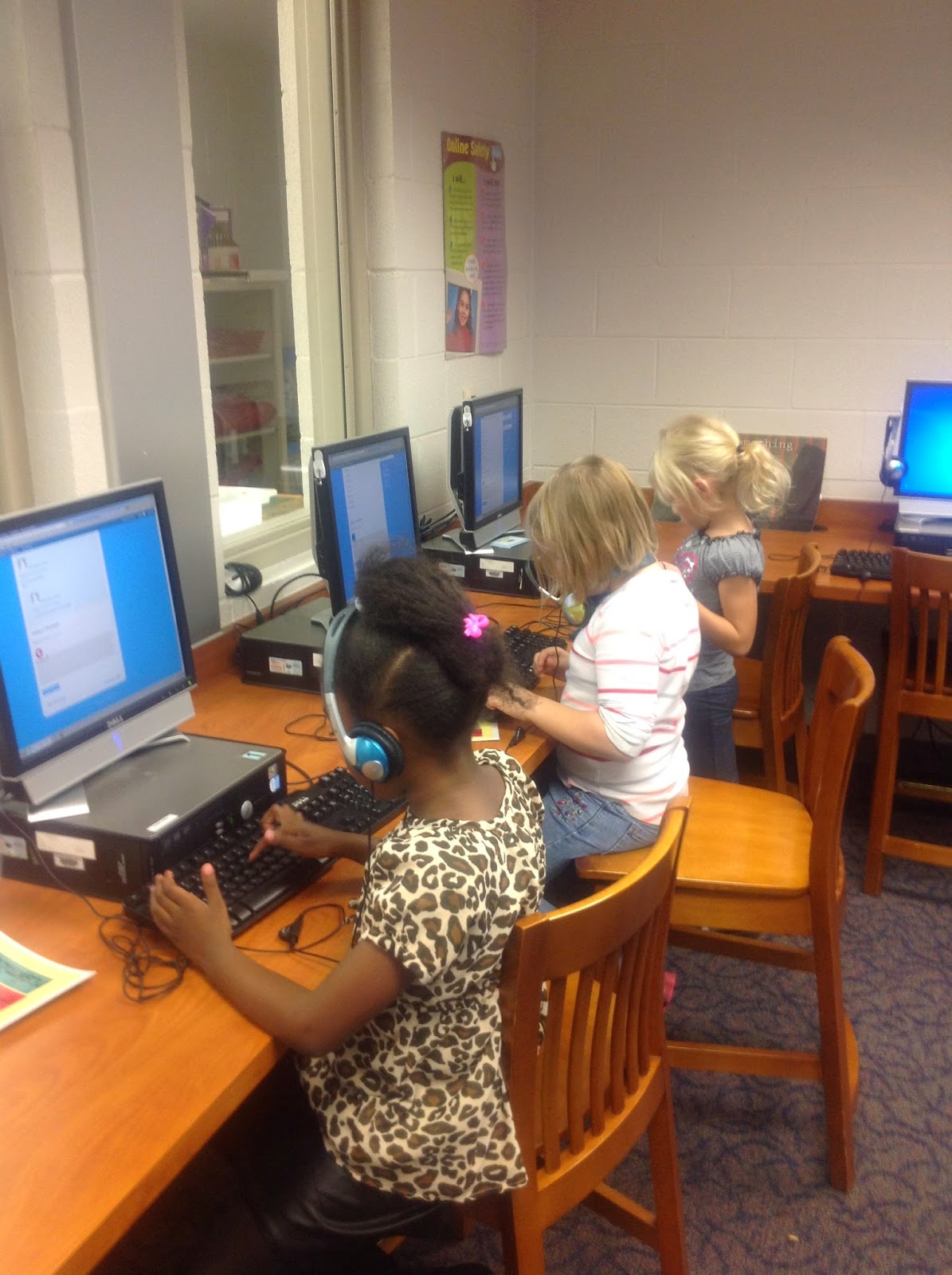
Last week, we started leaving comments on the students' blogs in the other classrooms.  This was easily accomplished by signing up for a few extra days in our school's computer lab.  I add the classroom(s) that we want to visit to the Blogroll on the home page of our Kidblog site.  It makes it much easier for my students to navigate.   If it sounds like a daunting task…don't panic.  It's not.  My first graders always amaze me at what they can do, when given the opportunity.  The are fearless!  They are willing to take risks in order to learn new things and that, in itself, fills my heart with joy.


One of the things that I always suggest to my students is that they include a question with each comment they make.  This sparks the conversation between students and classrooms.  Whenever,  I see comments on their posts I tease them a bit by saying, "It looks like you have a bit of homework."  This is the kind of homework your students will love.

Tips for Blogging with Students:

  • Use the computers in your classroom by creating a blogging schedule.
  • Allow students to blog during Daily 5 or other centers.
  • Start by creating simple posts like this, "Things I Like…"
  • Create easy passwords they can spell and remember.
  • Teach about blogging safety and digital citizenship.
  • Create a blogging community at your school or grade level.
  • If you have access to iPads, Kidblog also has an app.  I use it on my personal iPad which makes monitoring the site quick and easy to do.


I'm going to use my own advice.  So here's my question for you.  What tips do you have for blogging with students?  Please share them by leaving a comment below.

Saturday, June 16, 2012

The Book Stack

The Book Stack

Recently, I've been thinking about ways to encourage my first graders to read, write, and blog over the summer.  Having kids blog is a great way to support summer learning.  Educators know, all too well, the reality of the "Summer Slide".  However, there's plenty of time for learning AND all the other activities kids will participate in this summer.

I was thinking about how I'd love to have discussions with my students about what they're doing and reading this summer.  We could talk about books, recommend books to each other, and share our reading lives.  I thought it would be best to identify a day each week where my students could check-in on the blog and share what they are doing and reading.  Additionally, it might be more fun if I suggested a few book titles of my own.  Richard Allington, education researcher, calls this "Blessing Books".  Students love to reread the books that the teacher is reading aloud in class and books that their teachers recommend.  With all of these ideas floating around in my head, I came up with, Keep In Touch Tuesdays.  Each Tuesday, I asked my students to check in on our classroom blog.  Once they get there, they can read my book review post, and share their thoughts and questions about the book in the comments section.  They can read the book along with me, or they can read my book review.  Either way, I'm hoping this will encourage them to read some of the books, leave some comments/questions, and share what they are doing to stay busy this summer.  Maybe they're reading a book that's not in my stack, they could share that too.  The main thing is to read and share!

I also had the deli ma of deciding on the best place to do this.  Should we us our classroom blog or their individual student blogs?  By using the class blog, we'll have a central place where everyone can meet up and comment.  I love our classroom community, and our classroom blog seems to be the best place to share our reading lives.  Students could certainly continue to post things on Kid blog (individual student blogs) all summer.

During the last week of school I sent home a letter explaining, Keep In Touch Tuesdays.  I shared the letter with my students and explained how it would work.  Everyone was very excited about the idea of blogging over the summer and sharing books and what they are doing.  I can't wait to see what's going to happen and who will participate.  One of my students currently writes a blog post almost every weekend.  I made a big deal about how much I enjoy seeing her use her Kid blog on her off days and reading her posts.  Perhaps my other kiddos got my not very subtle hint.  Nonetheless, I'm very excited about the prospect of staying in contact with my students all summer long and reading and sharing books, which is one of my favorite things to do.  You can visit my classroom blog to read my introductory post which outlines the books titles and dates.  Also, stop by on Tuesdays and share and/or comment.  We would love the company.

What's in you book stack?  How are you encouraging summer reading and writing with your students?  Are your students blogging over the summer months and during holiday breaks?  I would love to hear from you.

Tuesday, May 22, 2012

Poetry: A Shared Writing Experience


My first graders have been busy reading, listening, noticing, and creating poetry.  I'm already considering different ways to tweak and improve this unit.  In my district we use Lucy Calkins' Units of Study for Primary Writing.  I also use other resources, such as Kid's Poems by Reggie Routman.

Some of the key understandings that I want students to take away from this unit are: 
  • Write about things you REALLY care about
  • Consider word choice
  • Use only the words you need for your message
  • Poems can be short
  • Poems utilize line breaks, white space, and repetition
  • Endings are important-Poems need a sense of closure
Some important considerations for me are:
  • Start with lots of examples-exposure to poetry is important
  • Choice is important-allow students to choose what they'll write about and which poem they'll publish 
  • Give students the opportunity to share their work daily


As we finish up our poetry unit, my students are been busy polishing their own poems.  A few days ago we created a class poem about pizza.  This poem was inspired by Kid's Poems by Reggie Routman.  We brainstormed words first, like hot, red peppers, peperoni, cheese crust, Hawaiian, black olives, mushrooms, and pineapple pizza. This is what our working copy looked like.


This is our final product:

I Love Pizza
by Mrs. Ruckes' Class

Pizza, pizza
People like
different kinds of pizza.
Pizza, pizza
People like
different kinds of toppings.
Cheese,
Pepperoni and
Ham
Pizza, pizza
Everyone loves pizza!

The kids were so excited about our class poem, and couldn't wait to publish it.  So we did.  Now, who should illustrate it?  Perhaps I will... I think they'll like that.

Next Steps?  Creating our Poetry Anthology.  These will make great gifts for the end of the school year.

When writing a class poem, do you guide your students to write the poem a certain way?
or
Do you just let the magic happen?

I would love to hear your thoughts.

Tuesday, April 3, 2012

Waiting

Do you ever get tired of waiting?  It is a part of life.  We wait in line at the grocery store.  We wait in line at our favorite department stores.  We wait in line to buy fast food.  We wait for appointments at the doctor and dentist office.  We wait for services at the hair and nail salon.  We wait for the computer to accomplish various tasks.  Even with high speed Internet connections, it still seems that we have to wait longer than we should.  Or perhaps, I'm just extremely impatient where computer tasks are concerned. 

Our mentality is that we want everything done fast.  Sometimes, we wait through telephone prompts, just trying to talk to service representatives.  Often we, or maybe it's just me, hang up because we get tired of all the waiting.

Is having to wait necessarily a negative thing?  Most of the time, it sure feels like it.  However, there are circumstances where waiting can be a positive thing.  I'm sure part of it has to do with what we're waiting for.  We wait when we are trying to learn new things.  After all, learning something new doesn't usually happen over night.  Teachers give students "wait time" when answering questions.  This allows students time to process information prior to responding, giving them more time to think before someone is chosen to answer the question.  Additionally, we wait for the right time to meet someone, to marry, to have children, to change careers, to begin new business ventures and adventures as well.  In all these instances, waiting is a positive thing.

What does all this waiting mean?  Waiting can mean an awful lot, when it comes to how one responds to a given situation.  In all the ways that waiting occurs, this is one of the most important.  I know you've had this experience too.  The one where you responded too quickly, and it just didn't come out the right way.  What came out of your mouth wasn't what you really wanted to say or intended to say.  It has happened to all of us.  It's still happening to some of us. 

What's the solution? ...WAITING!  When we have to respond to a comment or remark (usually negative in nature) we should wait, before sharing our response.  It can make all the difference in the world.  Our knee jerk reactions never seem to be the best response.  When we wait, take the time to think and process, our response comes out a lot better.  By waiting, we allow ourselves time to calm down, think about what was said and determine how we should respond.  Waiting can make a huge difference.  It can mean the difference between coming to an understanding or creating an even bigger problem.  Waiting gives us time to clear our heads.  Waiting, can be our friend.
What do you think?

Friday, August 12, 2011

WRITE IT DOWN!

As I prepare myself for the beginning of another school year, I have a million thoughts swimming around in my head. It's like filling a teacup with a fire hose.  My thoughts range from new ways to arrange my classroom to the best ways to engage above-grade level readers.  Many of you are planning to incorporate new structures and strategies from The Daily 5 and the Literacy CAFE.  Many of us are anticipating the thrill of blogging with our students for the first time.  Other fortunate teachers, I'm extremely jealous of this bunch, are in the process of unpacking new iPads for their students as we speak.

The last days of summer seem to be speeding right by.  Okay, some of you have already started the school year, and are probably tired of hearing the rest of us lamenting over summer.  Forgive me, but sometimes it's ALL ABOUT ME!  Or, that's what I tell myself from time to time.  As we prepare for a new school year, and as our classrooms and curriculum maps start to take shape on paper or at least in our minds, what's next on our To-Do lists?  WRITE IT DOWN!

Over the summer, I purchased a new journal.  This is not to say that I have never kept a journal before, because I have.  Whenever I attempt something new or major, that I expect to have a positive impact on my teaching, I keep reflection notes about it.  After every new lesson, activity, or instructional piece, I try to reflect on what went well, what didn't go so well, new ideas I want to incorporate next time, and things I want to change.  I plan to do those same things this year as well.   However, this year my plan is to start on the Very First Day Of School.  Additionally, I plan to use my newly purchased journal.

What I like about this journal are the writing prompts.  Yes, writing prompts are not just meant to support our students' writing endeavors, but they are helpful to adults who are trying to get their writing juices flowing too.  Each day's entry consists of two pages.  One page of writing prompts, and a second page for documentation/notes.  The writing prompts themselves are great.  Here are a few examples:  I am concerned about..., People/Students that touched my life..., Goals and ideas for a better tomorrow....  If you want to hear more you'll have to purchase one of these fantastic journals from The Write It Down! series at Journals Unlimited, Inc.  The website is http://www.journalsunlimited.com/


It's never too late to start a journal.  Keeping good reflection notes is a part of good teaching, regardless of which tool you use to do it.  I'm so excited about using my new journal that I couldn't wait to share it with you.  Do you keep a personal or professional journal?  I would love to hear your comments about how you use journals (for yourself/teaching) because today, it's ALL ABOUT YOU.  So, write it down!

Monday, July 25, 2011

THE INTERACTIVE READ-ALOUD

Reading aloud to students is one of the most important aspects of literacy in the classroom.  For teachers like myself, it's also one of the most enjoyable moments.  Even older children enjoy the stories that are read to them by their teachers.  What this usually looks like in the lower elementary classrooms is, a classroom of students, sitting on the carpet, gazing up at the teacher who is reading from a rocking chair, and hanging on to her every word.  (Let's be honest, others are playing around and distracted.)  In upper elementary classrooms the students may be sitting at desks, doodling on a pieces of paper, and attentively listening, as the teacher reads from a special place in the classroom.  What about those kids who are not tuned into the story....or distracted and daydreaming?  I'm so glad you asked.  The Interactive Read-Aloud invigorates the traditional read-alouds taking place in many classrooms.  Additionally, it stimulates the learning environment by engaging students in the read-aloud activity.

What makes the reading interactive?  Instead of being passive listeners during the Read-Aloud, the students are active participants in the learning and discovery.  In addition to listening to the story, the students are discussing elements, recording their thoughts in a Read-Aloud Notebook, and sharing their ideas with classmates.  Here's how to get started.  All you need is the Read-Aloud book, spiral notebooks for each student, composition books work well too, and a the Ways to Respond In Your Notebook chart, which is described below. Next, make a Book Preview packet.  Copy of the book jacket, including the summary/gist of the story, copy the first page of the story, and the author's biography.  If the book has a chapter page, copy that as well, or create a document listing the chapters from the book.  This is especially important if the chapter titles have names, rather than just numbers.  Make a preview packet for each student which includes the previous pages mentioned, and you're ready to get started.

Begin by introducing the Read-Aloud book to your students.  Issue each student a book preview packet, and a notebook.  Preview the book with the sudents using the preview packet.  Next, create a list of questions, about the book, suggested by the students.  Record each question on your interactive whiteboard, or on chart paper and save the chart or document.  Every day before beginning the reading, review the questions to see if any have been answered.  Additionally, record new questions that students have.  You can decide how often to add more questions based on your students' input.  Some days they may have lots of questions to add, and other days only a few.

READ-ALOUD
Next, start reading the book.  I like to read one or two chapters a day, depending on our schedule and the length of the chapters.  Allow more time on the day the book is introduced, since the preview and questions will take up a big chunk of your time.  You can also preview the book the day before strating the first chapter.  As you are reading aloud the book to your students, they are recording their thinking in their notebooks.  To support them with this, your students can refer to the Ways To Respond in Your Notebook chart.  The chart will give them ideas for how to respond in their notebooks.  I created a chart on poster board and hung it in my classroom as an anchor chart.  You could also create a chart on you interactive whiteboard and save it for use during each read-aloud session.  Here is a list of some of the items I included on my chart:

Ways To Respond In Your Notebook
  • Make a prediction
  • Ask a question
  • Draw a picture of your favorite part-include a caption or summary
  • Summarize the chapter(s)
  • Describe a character
  • Record a quote from the story and explain what you think it means
  • Describe a part you liked/ tell why
  • Describe a part you didn't like/tell why
  • Describe something you didn't understand
  • Make a list of interesting words
  • Explore the title-explain why you think the writer chose this title
The great thing about the Interactive Read-Aloud is the students are active participants in the task.  After the Read-Aloud, students use their notebook pieces to engage in discussions about the book.  These discussions can also occur periodically during the reading. 

ASSESSMENTS
What about assessments?  The assements are built into the learning activities during the Interactive Read-Aloud.  The students' Read-Aloud Notebooks and participation in the discussions, can both be used to assess students' understanding of the story.  I like to collect notebooks once a week for this purpose.  Additionally, when the story is finished, I have my students construct a written reflection as an additional assessment.  Students select one of their best notebook entries to compelete a written reflection of their understanding of the story.  I copy the notebook page and staple it to their reflection.  Later, when I'm reading their reflections, I can compare them to the entry in their notebook.  I also remind students, throughout the book reading, to write good notebook entries.  They will be referring to their notebook entries, when writing their reflection piece, once the Read-aloud book is finished. 

Below is a list of some of the titles I've used for my Interactive Read-Alouds.  As you revive your Read-Aloud time, you will be amazed at how much more your students learn and discover about the stories, as they become active participants in this interactive process. 

SUGGESTED BOOKS:
  • The Tale of Despereaux by Kate Dicamillo
  • The Miraculous Journey of Edward Tulane by Kate Dicamillo
  • The Beloved Dearly by Doug Cooney
  • Journey by Patricia Maclachlan
  • Shredderman by Wendelin VanDraanen
  • The Toothpaste Millionaire by Jean Merrill
  • Fourth Grade Rats by Jerry Spinelli
  • Maniac Magee by Jerry Spinelli
  • Lawn Boy by Gary Paulsen

Saturday, July 23, 2011

WRITING WITH TOOLS NOT TEARS

Some students love to write, some tolerate it, and others just hate it.  You know the scenario....the student sits and stares at a blank piece of paper for what seems like forever.  How do we get our most relunctant writers writing?  Even better, how do we get them excited about writing.  Every teacher has at one time or another had one or two students who didn't enjoy writing.  Okay, I'll say it, some students hate writing.  However, it really isn't that they hate it, they just don't feel they're good at it.  It makes perfect sense.  I mean, what person would enjoy something that they're not very good at.  Think about it.  Bad cooks don't enjoy cooking.  Nobody enjoys eating their cooking. Terrible singers don't enjoy singing.  Wait a minute.  I'm a bad singer, and I LOVE singing.  It's my family that doesn't like hearing it.  Well, that was a bad example, but you get the point.  If students were better writers they would enjoy writing.  Furthermore, in order for students to become better writers, they need to write more often.  It's a vicious cycle. 

Until last year I taught third grade.  By the time kids reach third grade, teachers usually have two or three relunctant writers in their classrooms.  Currently, I'm teaching first grade.  First grade writers are a totally different entity.  Most students are emergent readers and writers entering first grade.  Therefore, they're just learning how to read and write.  I don't know about you, but I certainly don't want to be the one responsible for their displeasure for writing.  How can we get primary students off to a good start with writing?  What tools, strategies and best practices, can we utilize to engage students in the writing opportunities that exist in the classroom?  How can use technology to support them in their writing?  Here is another way:

I came across a website called ReadWriteThink.  They have something called a Comic Generator.  Students can create their own comics on the computer or interactive whiteboard.  The Comic Generator allows students to choose from different layouts, characters, and settings.  The best part of all, the student has to WRITE the captions and dialogue.  After the comic is completed it can be printed or edited.  If you have an interactive whiteboard, your students could present their comics to their classmates.  I created a comic of my own as an example.  Take a look and see if you can get the gist of my comic.


Did you get it?  I'm dreaming about the first day of school and hoping I remember everything.  I'm upset because I have to go to school, even though I look and feel terrible.  Finally, I discover that it's Saturday.  Okay, so it's not very good, but I bet my first graders will do a lot better.  More importantly, they'll have so much fun creating, that they'll forget they're WRITING!
The website for the Comic Generater is http://www.readwritethink.com/