Showing posts with label reading workshop. Show all posts

Wednesday, July 23, 2014

#CyberPD Part III: Reading in the Wild: The Book Whisperer's Keys to Cultivating Lifelong Reading Habits


This week's reflection in on chapter 5 and the Appendices of Reading in the Wild:  The Book Whisperer's Keys to Cultivating Lifelong Reading Habits by Donalyn Miller.
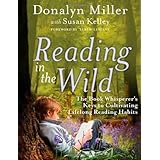
Product Details
 
Wild Readers Show Preferences

Assisting my students to become independent readers is one of my responsibilities as a teacher.  I want to support them as they grow into wild readers.  Like adults, our students are readers who have different personalities and experiences.  As we find out as much as we can about our students, we become better equipped to support them as readers. 

Helping to connect students to books is one of the ways that we can offer students support.  Three areas stood out for me in Reading in the Wild as ways for readers to “connect” to books.  They connect with books by being introduced to read-alike titles, by allowing them to include light reading as an option for book selection, and by providing them opportunities to reread favorite books.

Read-Alike Titles

I love the idea of read-alike titles.  As an adult reader, I often gravitate to the kinds of books I’ve enjoyed reading in the past.  Why should that be any different for my first grade readers?  Once I identify what my first graders enjoy reading, I can use their interests to suggest similar types of books for their independent reading time.  I’m also aware of the kinds of books my students tend to enjoy as a read aloud and I’m constantly on the look-out for those kinds of books.  Books that provide weird, gross, or interesting facts, books that make you laugh, and books that teach powerful lessons.  I’ve never referred to these as read-alike books before but I think this is my new, favorite title for identifying these books.

Light Reading

When my first grade readers choose books for their reading baskets I ask them to select 6-8 good fit books, 2 informational books, and 2 free choice or look-books.  Inevitably, I have some kids who choose books that are below their reading level as their free choice option.  Donalyn shares evidence that this type of reading helps readers become more competent and it motivates them to read more.  Who doesn’t enjoy a light read from time to time?  I think most wild readers do.

Rereading Favorite Books

In primary classrooms students enjoy rereading their favorite books.  On book shopping day I usually have 2 or 3 students who ask if they can keep one or two of the books in their baskets so they can reread them.   As I was reading the story Donalyn shared about her student, Jordan, who reread the Harry Potter series and shared how he “discovers new things” when he revisits books, it reminded me of my favorite movies.  In addition to loving books, I also enjoy watching movies.  Sometimes I watch my favorite movies over again.  I often discover new things in the movie upon the second or third viewing.  I often share this analogy with my students as well.  When I’m sharing a read aloud that my students have read before I explain that it’s like the movies I’ve seen again and again.   Perhaps they’ll discover something they didn’t notice before.  I also remind them that they are not the same readers they were last year when they were introduced to the book the first time.  There are a lot of benefits to rereading books.  “In fact, rereading books increases comprehension and enjoyment.” (p. 175) I totally agree with Donalyn when she says, “f they reread books because they love them, I say let them.  We want to develop students’ ownership of reading.  When we tell students they can’t reread a book they love, we put our goals in front of theirs.” (p. 176)

Nonfiction Reading

I was shocked to read that older students avoid and dislike reading nonfiction books.  I have to agree with Donalyn when she says that it’s probably because they lack positive reading experiences.  My first grade students love reading nonfiction texts.  I’m sure it has a lot to do with their curious nature.  First graders are like sponges and they soak up tons of information while listening to and reading nonfiction texts.  Over the last few years I’ve made an effort to share more nonfiction texts when I read aloud to my students.  On page 180 Donalyn shared this list of really good activities for using nonfiction text in the classroom:

·        Add more nonfiction book talks.

·        Read-aloud nonfiction texts.

·        Use nonfiction as mentor texts.

·        Pair fiction texts with nonfiction on related topics.

·        Provide students frequent opportunities to preview, read, and show nonfiction.

Appendices
There are a ton of great forms in the Appendices for use in supporting students as they become wild readers.  My goal is to revamp some of them in order to make them more primary-friendly.  I’m hoping that other primary teachers are planning to do the same thing.  Perhaps at some point we can share the forms we create.  I love the idea of using “reader” in place of “name” on these forms.  That was a great idea and one that I plan to use in other areas.

What are your thoughts?  Thank you for taking the time to read and add your voice to the conversation. 

Wednesday, July 9, 2014

#CyberPD Part I: Reading in the Wild: The Book Whisperer's Keys to Cultivating Lifelong Reading Habits

Product Details

                      
Beginning this week and for the month of July, I'm participating in #CyberPD (online professional development).  A group of educators, like me, will be reading the book, Reading in the Wild:  The Book Whisperer's Keys to Cultivating Lifelong Reading Habits by Donalyn Miller.  We'll be writing reflections about the book on our blogs, commenting on the blogs of others who are participating, and using Twitter to continue the conversations.  In this first session, I'll be reflecting on Chapters 1 and 2.  This event is hosted by Cathy Mere, Laura Komos, and Michelle Nero.  Thank you, ladies, for hosting this wonderful event.

I've been thinking about what it means to be a "wild" reader a lot lately. As a first grade teacher, I'm working with students who are at the beginning of their reading journeys. I want them to see themselves as readers.  While reading this book, I was looking through the lens of a first grade teacher and asking myself how these ideas might impact my own teaching.


Chapter 1
Wild Readers Dedicate Time to Read

Some Important Considerations:
  • "Students need to connect with other readers and participate in a reading culture that values them. Our students must see themselves as readers, or they will never embrace reading beyond school." (p.  9)
  • "It is difficult for many children to become wild readers if they don't read during the edge times." (wasted moments in between our daily commitments) (p. 13)
  • "Reading a book in one sitting (binge reading) is a rare indulgence, but most wild readers take advantage of the random Saturday or vacation and read books cover to cover." (p. 16)
  • "Most wild readers prefer a relaxing, quiet environment." (p. 23)
  • "Fake reading and reading avoidance commonly occur when students lack independent reading habits, confidence, or adequate reading skills." (p.25)
  • "As teachers, we need to reclaim reflective practices for ourselves and use it as a tool to continually recalibrate our teaching to our core beliefs, determine what is and isn't working, and focus our teaching so we can continue to offer quality instruction that we can reasonably manage and maintain throughout the school year." (p.41)
The impact these ideas have on my teaching:
  • My first graders participate in partner reading time, daily.  They enjoy sharing and discussing books with peers and value this opportunity.
  • I'm always looking for creative ways to encourage my first graders to read outside of the classroom.  Last year, we carried books to read in between our gym and music specials.  We used this "edge time" to read more books.
  • As an adult reader, I enjoy binge reading.  I know that I'm hooked when I continue to think about the characters long after I have finished reading the book.  As a first grader teacher, I might have 1 or 2 binge readers in my classroom each year.  These students tend to read above grade level and have positive reading experiences outside of school.  I can model this behavior for all of my first graders by discussing and reminding them of the characters we know and love from books we've shared as class.
  • All students appreciate a quiet classroom during reading time.  Reading is thinking.  Our reading environment must support the reading and thinking we do all year.
  • I refer to fake-reading as "pretend reading" in my classroom.  I had a student who struggled in this area for most of the school year.  His reading was above grade level.  However, he did not value our reading time and complained of being bored.  It took me months to discover that he was not selecting books he was interested in reading.  Donalyn's warning signs (p. 27) are a helpful reminder of what students do when they are not really reading.  She also shares how to address these behaviors in chapter 1.
  • Reflection is the key to almost everything we do as teachers.  Like many educators, I'm constantly reflecting on my teaching.  Each year I find myself tweaking my teaching practices and classroom routines in an effort to support learners and provide a positive classroom experience for my students.
Chapter 2
Wild Readers Self-Select Reading Material

Some Important Considerations:
  • "When students select their own books to read and enjoy, they develop confidence in their abilities to make reading choices and build their capacity for choosing books in the future." (p. 46)
  • "Read-alouds provide students with support in choosing their own books by increasing their title and author awareness, improving their background knowledge and experience, and fostering increased motivation and engagement with reading through positive reading experiences." (p. 56)
  • "Book drawings are an engaging and fun way to introduce new books to students and encourage risk taking.  Students are more willing to try unfamiliar books when I endorse them and classmates express enthusiasm for reading them.  Even students who don't enter drawings build title and author awareness." (p.58)
  • "The more we know about books and our individual students, the better support we can provide." (p. 64)
  • "Students who regularly choose books that they can't read or don't enjoy are unlikely to read much or find reading personally gratifying.  Exposing students to lots of books and positive reading experiences while building a network of other readers who support each other provides student with tools that last beyond the classroom setting." (p. 70)
  • "Providing students with scaffolded opportunities to preview, evaluate, and choose texts gives them the practice they need in self-selecting books." (p.71)
  • Managing a classroom library requires curation--selecting the best, most current materials for curriculum needs and students' interests." (p. 80)
The impact these ideas have on my teaching:
  • My first graders enjoy choosing their own books to read.  Allowing them to fill their baskets with books of their choice is a huge motivator for reading.
  • Our Read-Aloud time is one of our favorites parts of the school day.  I love the idea of allowing students to select the next read-aloud using book commercials. (p. 54) 
  • We use the "Random Name Generator" on our Interactive White Board to randomly select students who want dibs our the newest additions to our classroom library or the next book in a series that was recently introduced.  It's is fast and effective with my first graders because they know the computer is doing the choosing rather than the teacher. 
  • Getting to know our readers is vital.  I've tried a number of different ways over the years, such as reading surveys and the like.  Last year, when I had a student teacher, I was able to conduct reading interviews with my first graders which provided some helpful information.  It's amazing how well you get to know the readers in your classroom when you talk to students even during informal gatherings like "lunch bunch" celebrations.  It's a matter of noticing, listening, and noting.
  • Making sure that my first graders have books they can read and enjoy is always a challenge.  On any given day I encounter children who are sitting with baskets of books that are too challenging for them to read.  This tends to be especially true of my struggling readers who desire to have a successful reading experience as they build stamina and encounter books they enjoy and connect with.  I'm wondering what would be the best way to approach a first grade friendly "Reading Selection Reflection".  Perhaps this could be accomplished in small groups by creating an anchor chart based on their input.  I'll have to consider this idea further.
  • Occasionally, I create tubs of books for students who need this extra support.  The books are at their reading levels and they do their book shopping out of these prearranged tubs.  They still have choice, however, they are not yet ready to choose books from our entire classroom library.  I have found this support to be quite successful.  Also, I love Donalyn's suggestion to "Unpack your thinking when evaluating a book and share it with students." (p. 71)  This would make a great mini-lesson and one that I need to share with my first graders periodically throughout the school year.
  • Our classroom library is one of those areas that is a work in progress.  I'm constantly working on the best way to arrange books and make them accessible to my first graders.  I also have a bit of a book addiction and I'm always buying new titles to add to our collection.  I love the idea of allowing students to carefully rummage through the books even before you introduce them to how to use the library.  One of my favorite first grade moments was the day I opened two boxes of donated books in front of my first graders and shared the books inside.  It was like Christmas in September.  That was a blast!
As I continue to dig into Reading in the Wild, I have lots to consider as I prepare for a new school year.  There are things that I can identify with because they validate what I'm already doing in my classroom.  There are a few areas that I have moved away from but I may need to "recalibrate" my teaching as it relates to these ideas.  And...some surprises that make me smile as I'm already starting to think about how I might tweak these ideas to engage and support first grade learners.  I can't wait to dig into chapters 3 and 4. 

Wednesday, August 8, 2012

August 10 For 10 Picture Book Event


This is my first year participating in the August 10 For 10 Picture Book Event.  Choosing only 10 books to share with you was a very difficult task.  However, I did manage to shrink down my list down to ten favorites.  These are the books that I tend to read each year in my classroom.  I share these books with my students for various purposes.  Sometimes they're chosen to support a reading strategy, sometimes they teach us life lessons, and often they are read for pure entertainment and enjoyment.

My 10 For 10 Picture Book Favorites


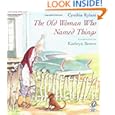
Product DetailsThe Old Woman Who Named Things 
Written by Cynthia Rylant and illustrated by Kathryn Brown

Cynthia Rylant is one of my favorite picture book authors.  We read a lot of her books in my first grade classroom.   She has two books on this list, so that in itself speaks volumes for her work.  The Old Woman Who Named Things is about an old woman who names the things around her.  She names her car, her furniture, her house, etc.  She names the things she knows she will never outlive.  This is all good and fine until she meets a puppy that she becomes very attached to.  After much reluctance on the old woman's part, she finally names the puppy.

The Old Woman Who Named Things is a wonderful story to read when building conversations around the themes of love, loss, and loneliness.  We use it to help us create a classroom community that is sensitive to those ideas.  I have also used this text with my first graders to demonstrate the comprehension strategy, checking for understanding.  It's a favorite in my classroom each year.  Look closely at the cover illustration...don't you just love her cowboy boots?  I think they're hilarious.  They really give you a glimpse of the old woman's character.

Product Details
Sometimes I'm Bombaloo
By Rachel Vail and illustrated by Yumi Heo

Sometimes I'm Bombaloo is one of the books I read during the first days of school.  I use it to introduce one of our classroom structures, The Safe Place.  The Safe Place is an area in my classroom where students can go when they feel sad, angry, or just plain "bombaloo".  It's just a bean bag which I've placed next to our Friends and Family board.  Sometimes I'm Bombaloo is about a girl who gets angry at different times throughout her day and finds that it can be a little scary having to deal with those feelings.  It's a great book that helps students recognize and deal with their own anger.  My students make lots of connections to the story and it helps us build important conversations around feelings, how we handle disagreements, and what we can do when we need a few minutes to ourselves.

Product Details
Chrysanthemum
By Kevin Henkes

Chrysanthemum is book written by one of our favorite authors, Kevin Henkes.  It's another go-to book I read when we are talking about feelings, and building a classroom community where everyone feels valued.  In the story Chrysanthemum is teased because her name is too long, and she's named after a flower.  The teasing finally stops when the music teacher tells everyone that she has a long name, and that her name is a flower too.   Chrysanthemum is also one of our favorite books to use when we are focusing on expanding our vocabulary and tuning into interesting words.

Product Details
No, David!
By David Shannon                                                                      

No, David! is a big hit in my classroom each year.  I'm always prepared for lots of laughter when I get to the page where David is running down the street naked.  My students think it's hysterical.  It's one of the best picture books that I've come across for helping students make inferences.  I love that it's a quick read since my first graders don't have a lot of stamina, in the beginning of the school year.  We read all of the David
books in my classroom.

Product Details
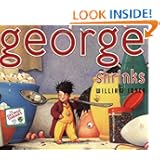
George Shrinks
By William Joyce

The first time I read George Shrinks, I fell in love with it.  It's a story about a boy who dreams that he turns small.  The suspense starts on the very first page, when the letters GO FROM LARGE to small type.  I love the colorful illustrations in this book.  Imagine being smaller than all of your toys, sitting on a spoon, and riding on your baby brother's back.  Joyce creates a story that uncovers the childhood imagination at its best.  You can't beat that for excitement!


The Paper Bag Princess
By Robert Munsch and illustrated by Michael Martchenko
Product Details
If I had to sum up this book in one word, it would be "Empowering".  The Paper Bag Princess is sure to empower young girls everywhere.  It's not your typical princess story.  There's a prince, a princess, and a dragon to boot.  However, Munsch gives this story so much more.  The Paper Bag Princess doesn't wear a beautiful gown, instead she wears a paper bag, she outsmarts the dragon, and she calls the prince a "bum".  This princess has courage, smarts, and lots of attitude.


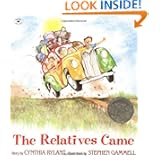
The Relatives Came
By Cynthia Rylant and illustrated by Stephen Gammell
Product Details
This is the second book by Cynthia Rylant that made my Top 10 list.  The Relatives Came is the story of a family that packs up all their things, jumps in their car, and drives all day to visit relatives.  When they get to their destination there's lots of hugging, pulling, crying, eating, and snoring as the relatives sleep all over the house, in the beds and on the floors.  Most students can relate to the happy times that the relative have during their visit.  I use this book to prepare them for our Family Read-Along.  Parents are invited to bring in books, blankets, and snacks on the second Friday of the new school year.  My first graders are so surprised to see their "relatives" arrive at our door, unannounced.  It's our first reading event of the school year and it's a great way to show parents how much we value reading.

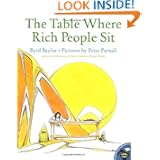
The Table Where Rich People Sit
By Byrd Baylor and illustrated by Peter Parnall
Product Details
The Table Where Rich People Sit was given to me some years ago by one of my students.  It's been one of my favorites ever since.  I love the messages in this story.  The Table Where Rich People Sit is about a girl who thinks her family needs to get more serious about their financial situation.  She calls a family meeting to talk to them but instead she gets a lesson on what is truly important in life.  The pages have a lot of text.  I usually save this on for the second half of the school year when my first graders have more stamina to sit for longer periods of time.  It's a great story to build conversations around the things we value in life and how we can be rich in ways that have very little to do with money.

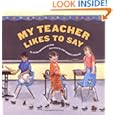
My Teacher Likes To Say
By Denise Brennan-Nelson and illustrated by Jane Donovan
Product Details
I love language and sharing idioms, proverbs, and cliches with my students.  My Teacher Likes to Say is a visual interpretation of those familiar idioms/proverbs/cliches.  Children, especially first graders, are not at all accustomed to hearing adults speak in these "funny" kinds of ways.  When I was a kid, my teachers often used phrases like, "put on your thinking caps".  Needless to say, I enjoy sharing some of these idioms with my students.  One of my favorites is, "please button you lip".  Read the book...it's a great way to share these fun sayings.


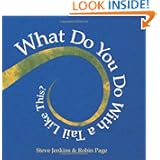
What Do You Do With A Tail Like This?
By Steve Jenkins and Robin Page
Product Details
Steve Jenkins is one of my favorite writers of nonfiction.  He doesn't disappoint with What Do You Do With A Tail Like This? Jenkins introduces readers to all kinds of animals, and shows us how these animals use the different parts of their bodies.  In the very first pages of the book you're shown various noses, and my first graders love guessing which animals they belong to.  If you need more nonfiction books in your classroom library, your students will certainly enjoy this wonderful addition.

I hope you find this list helpful.  There were so many others I wanted to add to the list.  After all, It's 10 for 10!

You can see more August 10 for 10 Picture Book lists at Cathy Mere's site, Reflect and Refine.

Friday, June 15, 2012

CAFE STRATEGY BOARD

Today was the last day of school.  My students attended school for only half of the day, however, teachers were  required to work a full day.  After my students gathered their things and said their goodbyes, I scanned the classroom, noticing all of the things that needed to be done.  This year, I decided to take a few pictures of some of the key structures in my classroom.  In the fall, when school resumes, I can refer back to my pictures when I'm ready to recreate or modify them.  One of the most important areas is my CAFE board.  It's important to have a place or anchor in the classroom where you can post the reading strategies that you teach/model with your students.

I've seen different arrangements for setting up a CAFE board.  The CAFE goals are usually at the top of the board/space.  Below each goal, there is room for placing the students' names under the goal that they are working on.  The individual strategies are then placed below that.  Since I teach first grade, I usually leave room at the bottom of the board for names (instead of at the top) because my students would have a hard time looking up at the top of the board to find their names.  Now, I have an even better solution to the name placement.  I take pictures of my students at the beginning of the school year, cut them out, and place their picture next to the strategy they are working on.  This works perfectly and my students respond much more enthusiastically to seeing their picture next to the strategy rather than just seeing their name.

My CAFE board is a major focal point in my classroom and contributes to a successful launching and implementation of the Daily 5/CAFE in my classroom.  It's not a board, like so many others, that goes unnoticed once it's introduced.  It's a board that is a continual work in progress in my classroom.  I refer to the CAFE board daily and sometimes several times in the day.  My students refer to the CAFE board, they use it as a reference, and as a tool.  When I introduce a new strategy, it's placed on the CAFE board.  When I refer to a previously introduced strategy, I point/touch the CAFE board.  When students are working on a new goal, they move their picture to the appropriate place on the CAFE board.  The majority of our literacy discussions take place under the backdrop of our CAFE board.

Take a look at my CAFE board below.  You won't see pictures of students because they were taken off the board and given to them as a year-end memento.  However, the remainder of the board is just as we left it.    Do you use a CAFE board for your Daily 5/CAFE instruction?  Is there anything unique or different about your board?  Please share what's different or unique with us in the comments section.  Perhaps you have a setup that works better for older students.  I would love to hear from you.